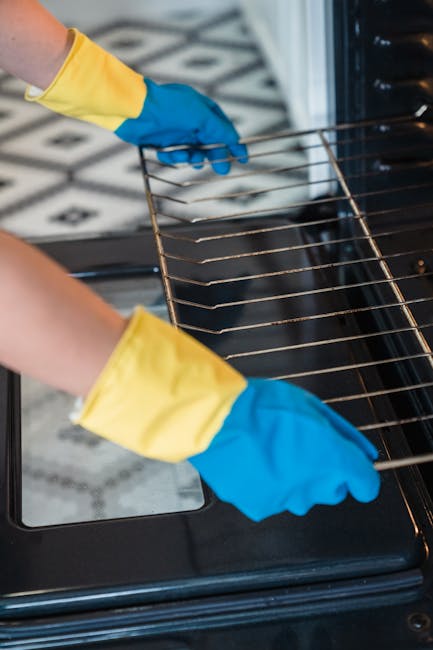
Hidden extra charges for Ilford oven cleaning: what to know
If you are booking an oven clean in Ilford, the headline price is only part of the story. The real question is whether that quote includes the awkward bits: heavy grease, extra racks, a burnt-on hob, a splashback that needs attention, or a trip charge tucked away in the small print. Hidden extra charges for Ilford oven cleaning what to know is not just a budgeting issue. It is the difference between a smooth appointment and that slightly annoying moment when the final bill lands higher than expected. Let's face it, nobody enjoys surprise add-ons.
This guide breaks down how oven cleaning quotes usually work, where extra costs can appear, and how to spot fair pricing before you book. It also gives you a practical checklist, a comparison table, and a few grounded tips from the real world. If you want a cleaner oven without the awkward invoice chat afterwards, you are in the right place.
Why hidden charges matter
On the surface, oven cleaning looks simple. A technician arrives, deep cleans the appliance, wipes away the grime, and leaves you with a shiny finish and fewer smells drifting around the kitchen. In practice, though, ovens vary hugely. A compact single oven in decent shape is not the same job as a double oven with caked-on residue, greasy side panels, a dirty extractor hood nearby, and trays that have not seen daylight for months.
That is why hidden charges matter. Some companies quote a base price that sounds attractive, then add fees for items they did not count at the start. Others are perfectly fair but assume you know what is included. The problem is not always bad intent. Sometimes it is a vague quote, and that can be just as frustrating.
For Ilford households, this matters for another reason too: many people compare several local cleaning services quickly, often while juggling work, kids, or a tenancy deadline. In that rush, a cheaper quote can look like the best value, when really it is the least clear. A clear quote is usually the better deal. Usually. Not always, but usually.
If you are comparing broader home services as well, it can help to look at related pages such as deep cleaning or one-off cleaning to understand how service scope changes price and expectations.
How hidden extra charges for Ilford oven cleaning what to know works
Most oven cleaning quotes are built from a few common parts:
- Appliance type: single oven, double oven, range cooker, Aga-style cooker, or combination setup.
- Condition: light grime, normal household build-up, or heavy carbon deposits and burnt-on grease.
- Accessories included: racks, trays, shelves, fan covers, door glass, and removable parts.
- Location factors: parking access, stairs, tight entry points, or longer travel time.
- Extra items: hob, extractor, splashback, microwave, or adjacent kitchen cleaning.
Hidden charges usually appear when one of those parts was not included in the initial conversation. For example, the quote might cover the main oven body but not the racks and trays. Or the company may advertise a low starting price for a standard single oven, then add a surcharge for heavy build-up once they see the appliance in person.
Here is the key thing: a proper quote should tell you what the base price includes and what would cost more. If you get a quick price over the phone, ask exactly what is covered. If you get an online quote form, read the notes, not just the headline number. Those notes are where the "oh, by the way" fees often hide.
In some cases, extra charges are reasonable. If the oven is left in a condition that requires much longer cleaning time, a company may need to charge more. The important part is that the reason is explained before work begins, not after the cloths are packed away.
Expert summary: a transparent oven cleaning quote should tell you the appliance type, what parts are included, whether heavy soiling costs extra, and whether travel or parking fees apply. If any of that is missing, ask before you book.
Key benefits and practical advantages
Understanding extra charges is not just about saving money. It also helps you choose the right service with less stress. A clear quote gives you better control, better comparisons, and fewer awkward conversations on the day.
- More accurate budgeting: you can judge the real total cost, not just the teaser price.
- Better comparisons: you can compare like for like instead of comparing a basic quote with a fully inclusive one.
- Less stress on the day: nobody wants to haggle at the door.
- Improved trust: transparent pricing usually signals a more reliable provider.
- Fewer disputes: when expectations are clear, there is less room for confusion.
There is also a quality benefit. Companies that explain their pricing clearly often explain their process clearly too. That tends to go hand in hand with better service. Not guaranteed, of course, but it is a strong clue.
If you are arranging several home tasks at once, it may also be worth looking at domestic cleaning or house cleaning to see whether bundling services could be more practical than booking each job separately.
Who this is for and when it makes sense
This advice is useful for almost anyone booking an oven clean in Ilford, but some people need it more than others.
Homeowners and renters
If you want a spotless oven before guests arrive, or you just cannot face another weekend of scrubbing, a clear quote matters. Renters may need a clean for a move-out inspection, and the timing can be tight. In that situation, surprise fees are the last thing you need.
Landlords and letting agents
If you manage a property, consistency matters. You need to know what is covered so you can keep records, compare service providers, and avoid invoice disputes with tenants or contractors. A clean breakdown is worth its weight in tea bags.
Busy families
When the kitchen is the centre of family life, ovens get used properly. Roasts, tray bakes, sausages, pizza nights, the lot. That means grease builds up fast. If you are booking a clean to save time, you will want the final number to stay sensible.
Anyone comparing local services
If you are collecting two or three quotes, hidden charges can make a cheap-looking option more expensive than a slightly higher but fully inclusive one. That is especially relevant when comparing specialist oven care with broader services like cleaners or a general cleaning company.
Step-by-step guidance
Here is a simple way to avoid surprise charges without turning the whole thing into a project.
- Identify the exact appliance. Note whether you have a single oven, double oven, range cooker, or combination setup. Mention any attached hob or extractor if you want those cleaned too.
- Describe the condition honestly. Say if there is heavy carbon build-up, burnt-on food, smoke staining, or a long period since the last clean. It is better to be upfront than to argue over what "average condition" means.
- Ask what is included in the base quote. Check the main oven cavity, racks, trays, door glass, seals, fans, and removable parts. Ask whether cleaning the outside of the appliance counts.
- Check for surcharges. Ask about heavy soiling, extra appliances, parking, access issues, weekend appointments, and emergency bookings.
- Confirm the total before booking. You want the price you expect to pay, not a mystery number that appears later.
- Read the terms. A short scan of booking terms can save a lot of grief. Seriously, two minutes now can prevent a headache later.
- Take quick photos if needed. If the oven is unusually dirty or the kitchen layout is awkward, images can help the provider quote more accurately.
A small but useful habit: keep the quote in writing, even if it is only a message or email. If the cleaner says one thing on the phone and the invoice says another, written confirmation makes the conversation much easier.
Expert tips for better results
These are the little details that tend to make the biggest difference.
- Ask for an inclusive price. The phrase sounds simple, but it forces clarity. Inclusive pricing should mean the provider lists what is covered and what is not.
- Check whether accessories count as extras. Some companies include racks and trays. Others do not. That alone can change the final figure.
- Look out for minimum booking values. If you only need a small job but the provider has a minimum charge, it may not be obvious at first.
- Be cautious with "from" pricing. It is not always misleading, but it does mean the real price may be higher depending on condition or appliance size.
- Ask about same-day or urgent visits. These can carry a premium.
- Check parking expectations in advance. In some parts of Ilford, parking is not exactly a dream. If parking is difficult, a provider may need to build in time or cost.
There is a practical side to this too. A good company usually wants an accurate booking, not a surprise. If you describe the oven properly, everyone wins. Less back-and-forth, less confusion, fewer raised eyebrows.
If you are also dealing with renovation dust or leftover building mess, after builders cleaning may be relevant, because post-build dirt often affects kitchens and appliances in ways people do not expect.
Common mistakes to avoid
Most pricing problems come from small oversights rather than major errors. A few to watch out for:
- Assuming the quote is all-inclusive. If it is not explicitly stated, do not assume.
- Forgetting to mention extra appliances. A hob, extractor, or second oven may be treated as a separate item.
- Comparing prices without comparing scope. One quote may include far more than another.
- Ignoring access problems. Narrow stairwells, basement kitchens, or parking limits can affect the visit.
- Not asking about VAT or other tax treatment. If a business charges it, that should be clear before you agree.
- Booking on price alone. Cheapest is not always cheapest once extras appear. Funny how that works, isn't it?
Another common issue is failing to separate oven cleaning from broader kitchen cleaning. If you want the splashback, cupboards, and surrounding surfaces cleaned too, say so directly. Otherwise the provider may clean only the oven itself and leave you expecting more. That mismatch causes most of the awkwardness.
Tools, resources and recommendations
You do not need specialist equipment to protect yourself from hidden charges. A few simple tools and habits are enough.
- Phone notes: keep a list of what was promised in the quote.
- Photos: useful if the oven is heavily soiled or has unusual features.
- Measuring tape: handy if you are unsure about appliance size.
- Previous invoice or booking confirmation: helpful when you are comparing repeated services.
- Written checklist: this stops key questions getting missed during a rushed call.
If you are thinking beyond oven cleaning and want a deeper home care plan, related service pages such as deep cleaning, one-off cleaning, and home cleaners can help you judge whether the job is part of a wider tidy-up or a standalone task.
One practical recommendation: ask the provider to spell out any likely extras before the appointment is booked. It is not rude. It is sensible. Most reputable cleaners expect the question and will answer it clearly.
Law, compliance, standards, or best practice
For most customers, this is less about legal complexity and more about consumer fairness and clear communication. In the UK, best practice is straightforward: prices should not be presented in a way that is likely to mislead, and any additional costs should be made clear before you agree to the service. If a quote is vague, ask for clarification. If terms are hard to understand, ask for them in plain English.
From a service-provider perspective, decent business practice includes clear scope, clear exclusions, and clear payment terms. Good companies also explain how changes are handled if the job turns out to be larger than expected. That helps both sides. It prevents disputes, and it keeps the work professional.
If a company has public pages on matters such as pricing and quotes, terms and conditions, and payment and security, those are worth a look because they usually explain how billing, deposits, card payments, and charge changes are handled.
You may also want to check trust-oriented pages like insurance and safety, health and safety policy, and complaints procedure so you know how the business handles issues if something goes wrong. That is not being paranoid. That is being careful with your money.
Options, methods, or comparison table
Here is a simple comparison of the most common pricing approaches you will come across.
| Pricing style | What it usually means | Pros | Watch out for |
|---|---|---|---|
| Fixed inclusive price | One price covers the listed oven type and agreed inclusions | Easy to budget, fewer surprises | Check what counts as included |
| Starting price or "from" price | A low base rate that can rise depending on condition or extras | Can be competitive for simple jobs | May not reflect your actual total |
| Itemised quote | Each part of the job is priced separately | Very transparent, useful for comparison | Can look more expensive at first glance |
| On-site assessment price | The cleaner confirms the cost after seeing the appliance | More accurate for unusual jobs | You need a clear agreement before work starts |
For most people, a fixed inclusive price is the easiest to live with. But if your oven is unusually large, very dirty, or part of a bigger kitchen clean, an itemised quote may be more honest and easier to compare. Truth be told, the best format is the one that leaves nothing important unsaid.
Case study or real-world example
Imagine a family in Ilford booking an oven clean before relatives arrive for a Sunday lunch. The initial quote looks fine: a reasonable price for a single oven. Then, during the booking call, it turns out the oven has not been cleaned properly for over a year, the racks are heavily burnt on, and they also want the extractor hood and hob included. Suddenly the base price is no longer the full story.
Now imagine the same family asking three simple questions before confirming:
- Does the price include racks and trays?
- Is heavy soiling charged differently?
- What would the total be if the hob and extractor are added?
That tiny bit of clarity changes everything. The final price may still be higher than the headline figure, but it is no longer a surprise. The family can decide whether to go ahead, adjust the scope, or book a different service. Simple, really. And much calmer.
We see this kind of thing all the time: the issue is rarely the cleaning itself. It is the expectation around the price. Once that is sorted, the rest tends to run smoothly.
Practical checklist
Use this before you confirm any oven cleaning booking in Ilford.
- Have I identified the exact oven type?
- Have I described the condition honestly?
- Do I know what the base price includes?
- Have I asked about racks, trays, door glass, and removable parts?
- Have I asked whether hob, extractor, or splashback cleaning costs extra?
- Have I checked for parking, access, or travel charges?
- Do I know whether VAT is included or added separately?
- Have I asked if urgent or weekend slots cost more?
- Do I have the quote in writing?
- Have I read the terms and cancellation conditions?
If you can tick all of those off, you are in a much stronger position. No need to overcomplicate it. Just be clear, ask the obvious questions, and keep the paperwork.
Conclusion
Hidden extra charges for Ilford oven cleaning what to know comes down to one simple principle: clarity beats surprise every time. A fair price is not always the lowest price, and a good quote is not just a number. It is a clear explanation of what you are paying for, what could cost more, and what happens if the job turns out to be bigger than expected.
When you know how oven cleaning pricing works, you can compare services properly, avoid awkward add-ons, and choose with confidence. That is especially useful in a busy place like Ilford, where people often want the job done well, done quickly, and done without fuss. Fair enough, really.
Get a free quote today and see how much you can save.
If you are still deciding, keep it simple: ask clear questions, get the price in writing, and choose the provider who explains things properly. That small bit of care tends to pay off. And once the oven is gleaming again, the whole kitchen feels lighter somehow.
Frequently asked questions
What are the most common hidden charges in oven cleaning?
The most common extras are charges for heavy soiling, additional racks or trays, hobs, extractors, splashbacks, difficult access, parking, and urgent bookings. Some companies also separate standard oven cleaning from add-on kitchen surfaces.
How can I tell if an oven cleaning quote is really inclusive?
Ask for a breakdown of what is included. A fully inclusive quote should state the oven type, the parts cleaned, whether accessories are included, and whether travel or parking costs are added later.
Do all oven cleaners charge extra for burnt-on grease?
Not always, but many do if the cleaning time increases significantly. The key is that the reason should be explained before the job starts, not after.
Are weekend or same-day oven cleaning visits more expensive?
They can be. Some providers charge a premium for urgent appointments or out-of-hours slots because they have to rearrange schedules or cover extra travel time.
Should I expect to pay more for a double oven or range cooker?
Yes, usually. Larger appliances take longer and require more product, more labour, and more attention to detail. A single oven price rarely covers a range cooker properly.
What should I ask before booking oven cleaning in Ilford?
Ask what the price includes, whether racks and trays are included, whether heavy soiling costs extra, and whether parking or access fees apply. It also helps to ask for the total in writing.
Can I avoid hidden charges completely?
You can reduce the risk a lot, but not every surprise is avoidable if the oven condition changes between quote and visit. Clear communication and photos usually help. A lot.
Is it better to choose the cheapest quote?
Not necessarily. The cheapest quote may exclude items that another provider includes. Compare the actual scope, not just the headline number.
Do I need to mention the oven condition honestly?
Yes. If the oven has heavy build-up, burnt deposits, or has not been cleaned for a long time, say so. That helps the provider quote accurately and avoids awkward price changes later.
What if the cleaner raises extra charges on the day?
Ask why the extra charge is needed and whether it was mentioned in the quote or terms. If it was not explained beforehand, you can request clarification before agreeing to any added cost.
Are written quotes better than phone quotes?
Yes, because written quotes give you something to refer back to. A phone quote can be useful at the start, but a written confirmation is much safer if questions come up later.
Where can I check a company's payment and complaint information?
Look for pages such as payment terms, complaints procedure, and terms and conditions. Those pages usually explain how the company handles billing, issues, and service concerns in plain language.